

Hiking
Hocking Hills Caves: 5 Caves and How to See Them
On this page
Hocking Hills caves are mostly recess caves: huge overhangs carved into sandstone cliffs, not tunnels you crawl through. The five worth seeing are Ash Cave, Old Man's Cave, Whispering Cave, Rock House and the cave at Cantwell Cliffs. All five are in Hocking Hills State Park, free to visit and reached by marked trails.
Of all the caves in Hocking Hills, Ohio, Ash Cave is the closest to our cabin, 10 minutes away. Old Man's Cave and Whispering Cave are each about 18.
Hocking Hills caves at a glance
| Cave | What it is | Trail | Dogs |
|---|---|---|---|
| Ash Cave | Ohio's largest recess cave | 1/4 mile, paved | Leashed |
| Old Man's Cave | Recess cave in a gorge | 1 mile, moderate | Leashed |
| Whispering Cave | Region's second largest | 4.5 miles, difficult | Leashed |
| Rock House | The park's only true cave | About 1 mile, moderate | Leashed |
| Cantwell Cliffs | Recess cave on a rugged loop | About 1.3 to 2 miles | Leashed |
Trail lengths come from Ohio DNR. Dogs need a leash of 6 feet or shorter.
How the caves in Hocking Hills formed
Every cave here is cut into Black Hand sandstone, laid down as sand and gravel more than 350 million years ago. The rock has hard layers on the top and bottom and a softer layer in the middle.
Water and weathering wear the soft middle away faster, so the cliff gets undercut while the hard top stays put. Over time that leaves a deep, curved overhang. This kind of opening is also called a rock shelter, and here it's a recess cave.
Rock House is the exception. There, weathering widened cracks in the middle layer until they opened into a long corridor with walls and windows.
Ash Cave, the largest
Ash Cave is the biggest of the Hocking Hills caves and the easiest to reach. Ohio DNR calls it the largest recessed cave in Ohio: horseshoe shaped, nearly 700 feet wide, 100 feet deep and 100 feet high. A flat, paved quarter-mile trail leads in, and it's wheelchair accessible.
The name comes from a pile of ash settlers found under the overhang, about 100 feet long, 30 feet wide and 3 feet deep. Long before that, people of the Adena culture sheltered here and left tools, pottery, corn cobs and animal bones.
In the 1800s the cave's acoustics made it a meeting place. A big stone at the entrance, Pulpit Rock, served as the preacher's stand. The Columbus Symphony has played summer concerts inside the cave since 2022, and Ohio DNR added a historical marker at the trailhead in 2025.
Old Man's Cave
Old Man's Cave is the most popular spot in the region. The cave itself is a recess in the gorge wall, partway along a 1-mile trail that also passes waterfalls, stone bridges and rock shapes called Sphinx Head and Eagle Rock.
It's named for Richard Rowe, a trader and hermit who lived in the cave from 1796 into the early 1800s. The visitor center and main lot sit at the trailhead off State Route 664.
Expect stone stairs and narrow spots, and plan on about an hour. For the falls along the way, see our guide to waterfalls in Hocking Hills.
Whispering Cave
Whispering Cave is the second largest cave in the region and the newest to open, in 2017. A seasonal waterfall drops 105 feet from its rim, and its acoustics are said to carry a whisper from one end to the other.
It takes the most work. The park's trail to the cave with Hemlock Bridge runs 4.5 miles and is rated difficult, so budget a long morning (more in our Whispering Cave, Hocking Hills guide).
Rock House, the one true cave
Rock House is the only one of the Hocking Hills caves that isn't a recess cave. It's a corridor inside the cliff, about 200 feet long, 25 feet high and 20 to 30 feet wide. A row of seven openings looks out past stone columns into the trees.
People used it for shelter for thousands of years, and it has drawn visitors since the Rock House Hotel was built in 1835. The trail is about a mile and rated moderate. Rock House sits north of the main park areas, so pair it with Cantwell Cliffs or Conkle's Hollow on the same drive along the Hocking Hills scenic byway.
Cantwell Cliffs
Cantwell Cliffs, at the north edge of the Hocking Hills, is one of the more rugged areas in the park. Ohio DNR rates it difficult and lists 2 miles of trail, while the park map shows rim and gorge loops of about 1.3 miles.
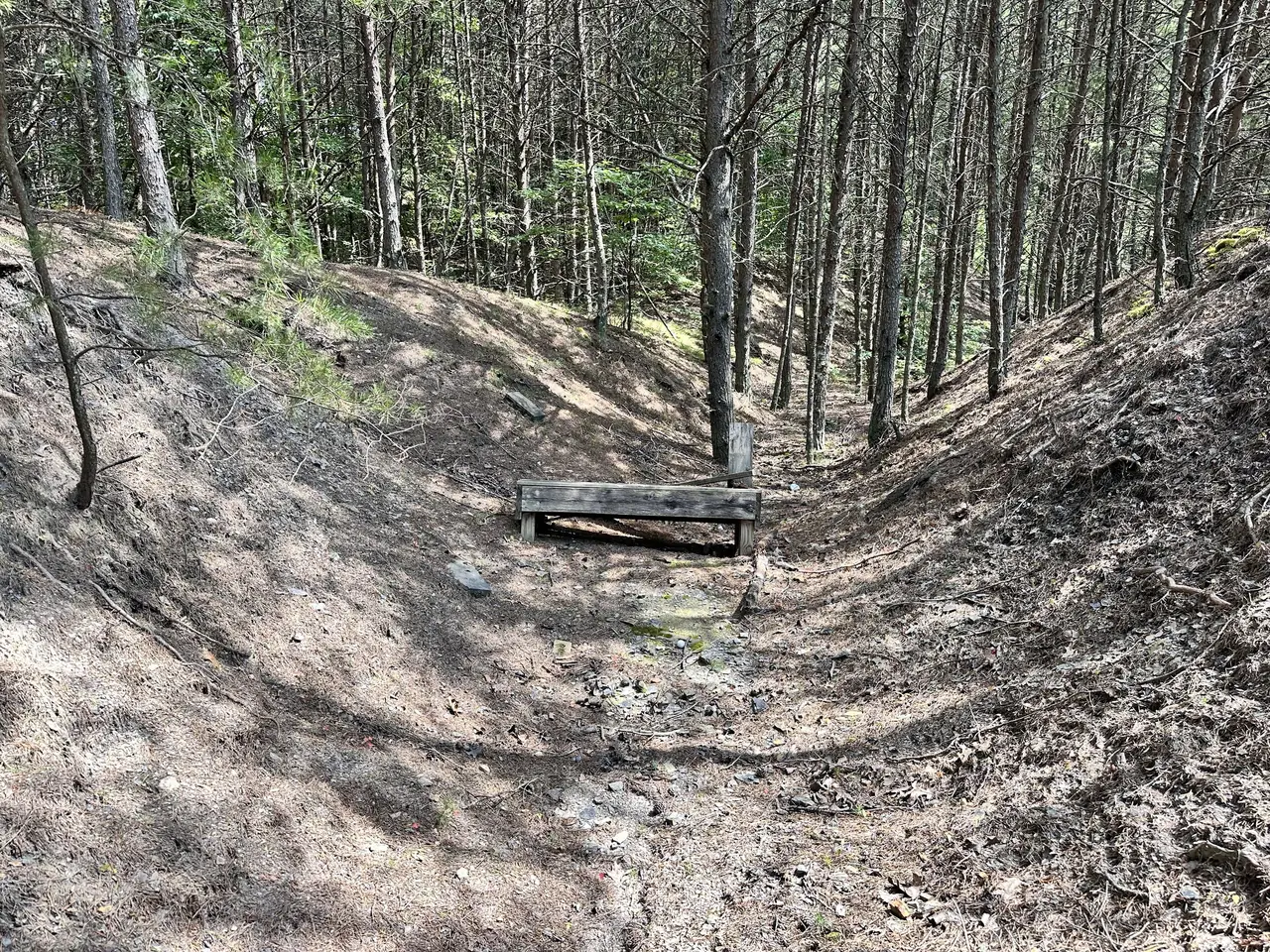
Expect steep climbs to and from the recess cave. Wear real shoes and leave extra time.
Visiting the Hocking Hills caves
- Stay on the marked trails. Ohio DNR requires it, and the sandstone gets slick when wet.
- Climbing and rappelling aren't allowed in the park. There's a designated area in neighboring Hocking State Forest.
- Leave the rocks where they are. State park rules forbid taking stone, so save collecting for gem mining in Hocking Hills, Ohio.
- Trails are open from half an hour before sunrise to half an hour after sunset, and admission is free.
- Leashed dogs are fine at all five caves. Conkle's Hollow, a gorge nearby, is a nature preserve where pets aren't allowed.
- In winter, trails are often icy. Ohio DNR recommends ice cleats.
Hiking more than the caves? Our ranking of the best Hocking Hills hikes covers every major trail, and our guide to things to do in Hocking Hills covers the rest of the region.
Which cave to see first
Start with Ash Cave. It's the largest of the Hocking Hills caves, the easiest walk and our closest big sight. Go early or late in the day for the quietest visit.
Then drive to Old Man's Cave for the gorge, and save Rock House or Whispering Cave for the next morning. Bringing the whole family? See how our cabin sleeps nine on the page about Hocking Hills cabins for groups.
Hocking Hills caves FAQs
Can you go inside the Hocking Hills caves?
You can walk into all of the Hocking Hills caves, but most aren't caves in the usual sense: Ash Cave, Old Man's Cave and Whispering Cave are open overhangs you stand under. Rock House is the one you walk through, a corridor inside the cliff with seven window-like openings. All five are free and reached by marked trails.
What is the largest cave in Hocking Hills?
The largest cave in Hocking Hills is Ash Cave, which Ohio DNR calls the largest recessed cave in Ohio: nearly 700 feet wide, 100 feet deep and 100 feet high. It's also the easiest to visit, at the end of a flat, paved quarter-mile trail that's wheelchair accessible. Whispering Cave is the second largest in the region.
How were the Hocking Hills caves formed?
The Hocking Hills caves formed in Black Hand sandstone, which has a soft middle layer between harder ones. Water and weathering eroded that middle layer faster, undercutting the cliffs into deep overhangs called recess caves. At Rock House, weathering widened cracks into a corridor instead, which is why it's the park's only true cave.
Are dogs allowed in the Hocking Hills caves?
Dogs are allowed at all five Hocking Hills caves on a leash of 6 feet or shorter: Ash Cave, Old Man's Cave, Whispering Cave, Rock House and Cantwell Cliffs. The exception nearby is Conkle's Hollow, a state nature preserve where pets aren't permitted. Bring water for them, since some trails have long stair climbs.
Is Rock House worth the drive?
Rock House is worth the drive if you want a cave you can actually walk through. It's the park's only true cave, a 200-foot corridor with seven openings in the wall. It sits north of Old Man's Cave and Ash Cave, so pair it with Cantwell Cliffs or Conkle's Hollow to make the trip count.
About the authors
Our storyRelated reading


Your stay
Make Serenity Lodge your base camp.
From $300 a night for up to 9 guests. Book direct and save about 13%.